Analytics showed a spike in clicks last month. Conversion did not move. Support tickets mentioned "this page was not what I expected." The headline promised a secret. The article delivered a generic list and a contact form.
That pattern is expensive. Clickbait buys attention once. Click-worthy copy earns trust, repeat visits, and snippets that still perform after the novelty wears off.
We work on on-page SEO and search snippets with business teams who want more traffic without training visitors to distrust the brand. This article is about judgment and examples, not HTML field names.
Click-Worthy vs Clickbait: Definitions
| |
Click-worthy
|
Clickbait
|
|
Promise
|
Specific outcome or question answered on the page
|
Vague hype or shock with thin payoff
|
|
Snippet alignment
|
Title tag and meta description match the intro
|
Title overpromises; body changes subject
|
|
Reader feeling after 30 seconds
|
"This is what I needed"
|
"I was misled"
|
|
Long-term effect
|
Better engagement signals when content is strong
|
Higher bounce, weaker brand recall
|
|
Ethical curiosity
|
Opens a real gap the article closes
|
Manufactures outrage or secrecy for clicks
|
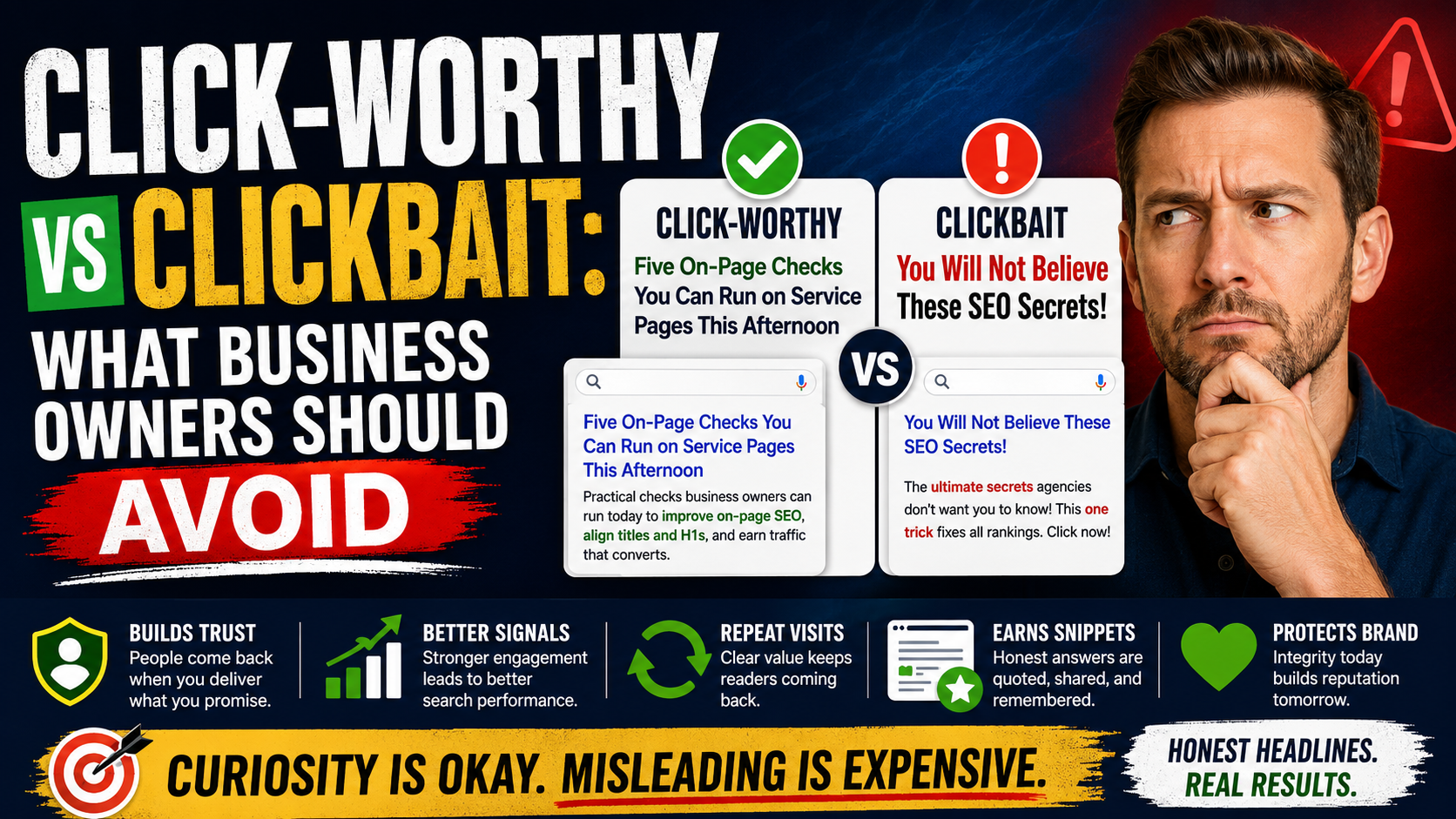
Click-worthy headlines use curiosity about a problem the page actually solves. Clickbait uses curiosity about something the page never delivers.
Headline Pairs: Good Instinct vs Trap
|
Weak (clickbait-leaning)
|
Stronger (click-worthy)
|
|
You Will Not Believe These SEO Secrets
|
Five On-Page Checks You Can Run on Service Pages This Afternoon
|
|
This One Trick Fixes All Your Rankings
|
When a Title Tag and H1 Should Say the Same Thing (and When They Should Not)
|
|
Shocking Reasons Your Site Fails Google
|
Why New Pages Sometimes Lag in Search (and What Owners Can Verify First)
|
|
47 SEO Hacks Agencies Hide From You
|
Sustainable SEO Habits When Nobody on Your Team Is a Search Specialist
|
|
Doctors Hate This Website Trick
|
How to Write Meta Descriptions That Set Honest Expectations
|
The stronger column is not boring. It names audience, scope, or timeframe. A reader knows what they are opening.
Meta Descriptions: Set Expectations, Not Keyword Dumps
Meta descriptions appear under the blue link in many search results. They do not guarantee rankings, but they shape the first impression.
Click-worthy descriptions:
- Summarize what is on the page in plain language
- Use roughly 120 to 160 characters when possible
- Include a natural next step when it fits ("Compare options," "Run the checklist")
Clickbait-leaning descriptions:
- Stack unrelated keywords
- Promise outcomes the URL does not support
- Repeat the title tag verbatim with no added context
If your description sounds like a banner ad, rewrite it. If you are unsure whether title tags and descriptions align with body copy, run the beginner checklist for titles and meta descriptions on your top URLs first.
Red Flags on Business Sites
Watch for these patterns in titles, H1s, and newsletter subject lines:
- Empty superlatives: "ultimate," "shocking," "secret" with no specifics in the body
- Numbered lists with no substance: "10 tips" where eight are filler
- Title/H1 contradiction: search snippet promises pricing; H1 says "About our journey"
- Curiosity gap with no payoff: "What happened next will amaze you" on a product page
- Outrage bait: attacks a vague enemy ("agencies," "Google") without actionable detail
- Keyword stacks in the snippet: reads like spam before the visitor clicks
Any one of these can inflate clicks short term. Together they train people to bounce.
Green Flags: Curiosity Without Deception
Click-worthy patterns that still feel human:
- Name the reader: "for business owners," "for marketing leads," "before you sign a retainer"
- Name the scope: "in one afternoon," "on your top 10 URLs," "before launch"
- Name the tradeoff: "patch vs rebuild," "title tag vs H1," "index coverage vs full audit"
- Ask a real question the article answers in the first screen
- Use numbers honestly: "five checks" means five sections with five checks, not five sentences
Ethical curiosity opens a gap you close in the intro. Clickbait opens a gap you never intended to close.
One Afternoon Fix: Promise Mismatch Audit
Export or spot-check your top 10 URLs (homepage, main services, contact, recent posts):
|
Check
|
Pass?
|
|
Title tag describes what the page delivers
|
|
|
Meta description adds context, not keyword spam
|
|
|
H1 aligns with title promise (no contradiction)
|
|
|
Intro answers the headline within two paragraphs
|
|
|
No "secret/shocking/ultimate" without specifics in body
|
|
|
Snippet would still feel honest if quoted in a sales email
|
|
Fix mismatches on high-traffic URLs before you rewrite blog cadence. One corrected service page snippet often beats ten new posts with hype headlines.
How This Fits With Sustainable SEO
Search-friendly sites put people first. Headlines and snippets are part of that contract. Tricks that spike clicks but fail the read-aloud test belong in the same bucket as keyword stuffing and outdated ranking hacks: noise that erodes trust.
Build habits your team can repeat: honest promises, clear intros, technical hygiene on titles and descriptions, and content that deserves the click.
What is one headline on your site you would not email to a prospect without rewriting?
For the full beginner walkthrough (UX, technical basics, practices to avoid, and sustainable strategy), read our SEO basics beginner guide.